February often feels like the longest month in the Windy City. The holidays are over, but the dangerous roads remain. While December often gets the headlines for blizzards, Chicago car accidents in February frequently result in more severe injuries due to unpredictable black ice and deteriorating road surfaces.
Many drivers wrongly assume that because the snow plows are out, the roads are safe. If you were injured because another driver failed to respect the brutal winter conditions, a Chicago car accident lawyer can help you prove that their negligence, not the weather, caused your crash.
Key Takeaways: February Driving Risks
- Black ice is invisible: Fluctuating temperatures in February create transparent sheets of ice, especially on bridges and overpasses like the Chicago Skyway.
- Salt stops working: When temperatures drop near zero, road salt loses effectiveness, turning melted snow back into solid ice.
- Sun glare blinds drivers: The low angle of the winter sun during rush hour creates blinding glare that dirty windshields make worse.
- Potholes emerge: The constant freeze-thaw cycle breaks apart asphalt, creating tire-destroying craters on the Kennedy and local streets.
- Liability remains: Drivers must adjust their speed for conditions; sliding on ice is rarely considered a valid legal excuse for hitting someone.
Why is February Weather in Chicago so Deceptive?
Overconfidence in winter driving skills builds over the winter. By February, many Chicagoans think they have mastered driving on snow and ice, even though winter weather makes Chicago one of the most dangerous cities for drivers.
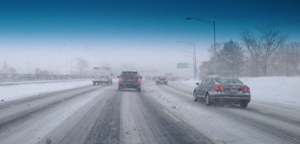
Unlike January, which is consistently cold, February often sees rapid temperature swings. The thermometer might hit 35 degrees during the day, melting snow, only to plummet to 10 degrees at night.
This freeze-thaw cycle turns wet roads into skating rinks. Commuters on the Dan Ryan or Lake Shore Drive might see dry pavement one minute and hit a patch of invisible ice the next. This unpredictability catches drivers off guard, leading to spin-outs and multi-car pileups.
When drivers fail to anticipate these shifts, they put everyone around them at risk.
The Threat of Black Ice on Bridges
Black ice is perhaps the single greatest cause of winter highway accidents in Cook County. It forms without bubbles, allowing the black road surface to show through. It looks exactly like a harmless wet patch until your tires lose traction.
Certain areas are notorious for this:
- Bridges and Overpasses: Elevated structures like the Jane Byrne Interchange freeze faster than roads on the ground because cold air circulates above and below them.
- Shaded Spots: Areas under the "L" tracks or in the shadows of downtown skyscrapers often harbor ice patches that last all day.
- Interstate Ramps: The curved ramps exiting I-90 or I-290 are prime locations for slide-offs when drivers take them too fast.
Knowing where ice hides can give you the split-second reaction time needed to avoid a collision.
Low Sun Angle and "Windshield Blindness"
We often worry about darkness, but in February, the sun itself is a hazard. During the morning and evening commutes, the sun sits low on the horizon. This angle shines directly into a driver's eyes, rendering sun visors useless.
This problem is compounded by "salt spray." Driving on the Eisenhower Expressway kicks up a fine mist of dried salt and road grime that coats windshields. When the intense glare hits this dirty glass, a driver's visibility can drop to zero instantly.
If a driver hits you because they couldn't see through the glare, they are likely liable for failing to maintain their vehicle and drive safely.
In Chicago, Pothole Season Starts Early
February is when Chicago’s paved infrastructure begins to crumble. Water seeps into cracks in the asphalt during the day and freezes at night. Water expands when it freezes, forcing the pavement apart. The result is jagged, deep potholes that can wreck a suspension or cause a tire blowout at 55 mph.
The danger isn't just hitting the hole; it is the reaction to it.
- Swerving: Drivers jerk the wheel to dodge a pothole, moving directly into the path of another car.
- Sudden Braking: Slamming on the brakes for a road defect can cause a rear-end collision on slick pavement.
- Loss of Control: Hitting a deep crater can bounce a car out of its lane, leading to sideswipe accidents.
While the city has a duty to maintain roads, drivers also have a duty to drive slow and maintain lane position.
Legal Liability: What’s the Difference Between "Act of God" and Negligence?
After a winter crash, the at-fault driver's insurance company often argues that the accident was caused by an "Act of God" due to the ice or snow. They want you to believe the crash was unavoidable. In Illinois, this defense rarely holds up, especially when property owners or municipalities are legally responsible for snow and ice removal and fail to keep roads or walkways reasonably safe.
Driving too fast for conditions
Under Illinois law (625 ILCS 5/11-601), drivers have a duty to decrease speed when special hazards exist regarding weather or highway conditions. The posted speed limit is for ideal conditions. If it is icy, driving 55 mph in a 55 mph zone is negligent.
Failure to maintain the vehicle
Drivers must keep their equipment road-ready. If a driver crashes into you because they had bald tires that couldn't grip the snow, or broken wipers that couldn't clear the salt spray, they are negligent. We investigate the condition of the at-fault vehicle to prove the crash was preventable.
Following too closely
Rear-end collisions are common in February. The law requires drivers to leave enough distance to stop safely. On icy roads, that distance must be significantly increased. If a driver slides into your rear bumper, it is usually because they were following too closely for the weather conditions.
We use these legal principles to fight back against insurance adjusters who try to blame the weather for their client's bad driving.
What Should You Do After a Winter Car Crash in Chicago?
Once the ambulance trip is over and you are recovering at home or in the hospital, the immediate danger has passed. However, the battle to protect your financial future is just beginning. Insurance adjusters start building their defense immediately, and you will need to take proactive steps to counter them.
While you focus on healing, take these simple steps to protect your claim:
- Hire a lawyer immediately: Evidence like traffic camera footage of road conditions disappears quickly. Your Chicago car accident lawyer can send “spoliation” letters demanding that vital evidence be preserved before the city or businesses overwrite or delete it.
- Attend every medical appointment: If you skip physical therapy or follow-ups, adjusters will argue you aren't truly hurt. Consistent treatment records are your best proof of the injury’s severity.
- Start a pain journal: Write down or video record your daily struggles, like difficulty walking on icy sidewalks or lifting your kids. This documentation supports your claim for pain and suffering damages and humanizes your case for a jury.
- Stay off social media: Do not post about the accident or even photos of you smiling at a gathering. Adjusters watch your accounts to claim your injuries are exaggerated.
- Keep your winter gear: Do not throw away your torn coat or salt-stained, damaged boots. They serve as physical evidence of the crash's impact.
Taking these steps turns your recovery time into a strategic advantage.
Frequently Asked Questions About Chicago Winter Car Accidents
Can I sue if I was hit by a driver sliding on black ice?
Yes. Black ice is a known hazard in Chicago. Drivers are expected to anticipate ice and slow down. Sliding is generally considered a failure to control the vehicle, not an unavoidable accident.
What if my accident involved a snowplow?
Accidents involving municipal snowplows are complex due to government immunity laws. However, if the plow operator was acting recklessly or violated safety protocols, you may still have a claim. These cases have shorter filing deadlines, so you must act fast.
Is the city liable for accidents caused by unplowed roads?
Generally, no. Municipalities in Illinois have significant immunity regarding the removal of snow and ice. They are usually only liable if they created an unnatural accumulation of snow that caused the hazard. However, we can investigate if specific circumstances warrant it.
How do I prove the other driver was going too fast if they were under the limit?
We use evidence like the severity of the damage, the length of skid marks, and witness testimony. If the damage is severe despite "icy" roads, it proves the driver was carrying too much speed for the conditions.
Can I claim compensation for a multi-car pileup?
Yes, but these cases are complicated. Determining who started the chain reaction requires a detailed investigation. We work to identify the initial negligent driver whose actions set off the pileup.
Can I get compensation if I was partially at fault for the crash?
Yes, as long as you were less than 50% responsible. Illinois uses a system called modified comparative negligence. If a jury finds you were 20% at fault because you were driving slightly too fast, you can still recover 80% of your damages. A skilled lawyer can fight to minimize your percentage of fault to maximize your settlement.
How long do I have to file a lawsuit for a winter accident?
In Illinois, you generally have two years from the date of the accident to file a personal injury lawsuit. However, if your accident involved a government vehicle (like a CTA bus or city snowplow), the deadline is often only one year. Missing these strict deadlines will permanently bar you from receiving compensation.
Don't Let Time Freeze Your Rights. Call Today for a Free Consultation.

February roads in Chicago are unforgiving, but the aftermath of a crash doesn't have to be. When insurance companies try to freeze you out of fair compensation by blaming the ice, you need a team that brings the heat.
At Abels & Annes, P.C., we know that safe driving is a year-round responsibility. We investigate weather reports, road conditions, and driver behavior to hold negligent parties accountable. You focus on recovering from your injuries; let us handle the fight for your financial future.Call us or contact us online today for a free consultation. We are available to answer your questions 24/7.